Best Scrum Tools in 2026 That Will 10x Your Team’s Productivity

Scrum isn’t just a framework anymore; it’s evolving from a business framework into the backbone of leading product teams. Even your world-class Scrum team will be less effective if they aren’t armed with the best Scrum tools.

Scrum management tools and agile scrum tools in the year 2026 have been dramatically revolutionized. With AI-facilitated planning and collaboration, and advanced reporting, the right usage of an agile scrum tool can be essential for companies.

Here’s your guide to the best scrum tools you should be using right now, for startup, enterprise, and scaling SaaS teams.

What Makes the Best Scrum Tools in 2026?

Before looking at the list, you need to figure out what differentiates average tools from the best Scrum tools:

Key Features to Look For:

  • Sprint planning & backlog management
  • Real-time collaboration dashboards
  • AI-powered insights & automation
  • Custom workflows for agile teams
  • Seamless integrations with dev tools
  • Scalable reporting for stakeholders

Modern Scrum project management tools are no longer just task trackers; they are intelligent systems that support the entire agile delivery methodology.

Scrum Tools vs Agile Tools: What’s the Difference?

This is where many teams get confused.

Although people often treat these terms as identical, they actually have different uses.

Agile Tools (Broad Category)

Agile tools are designed to support multiple frameworks, such as:

  • Scrum
  • Kanban
  • Lean
  • SAFe

They emphasize flexibility, adaptive processes, and continuous delivery across different workflows.

Scrum Tools (Specialized Category)

Scrum tools are specifically built to support Scrum practices like:

  • Sprint planning
  • Backlog refinement
  • Daily standups
  • Sprint reviews and retrospectives

Key Takeaway

👉 All Scrum tools are Agile tools
👉 However, not all Agile tools use Scrum tools.

If your team is dedicated to scrum, selecting more specific scrum project management tools will offer you an edge in sprint tracking, velocity, and backlog prioritizing.

To get a better perspective, have a look at our best agile tools guide to understand the wider ecosystem.

Top 10 Best Scrum Tools in 2026

1. Jira – The Industry Standard for Scrum Teams

Jira is still the leader when it comes to Scrum management tools. One of the most powerful agile tools available for a team of almost any size.

Why It Stands Out:

  • Advanced prioritization of backlogs
  • Sprint tracking with velocity charts
  • Strong integration ecosystem
  • Good for enterprise teams

As you probably already are brainstorming on the best agile software development tools, Jira must already enjoy a prominent position on your mind board.

2. ClickUp – All-in-One Agile Workspace

ClickUp has rapidly established itself as one of the foremost tools available in this category through its versatility and comprehensive features.

Key Features:

  • Built-in sprint templates
  • Custom dashboards
  • Docs, goals, and tasks in one place
  • Automation for repetitive workflows

It’s perfect for teams offering saas application development services who need everything centralized.

3. Trello – Simple Yet Powerful Scrum Boards

Trello is still one of the best free Scrum tools, especially for small teams or beginners.

Why Teams Love It:

  • Visual Kanban-style boards
  • Easy drag-and-drop interface
  • Power-ups for added functionality
  • Quick onboarding

For startups working on MVPs, it pairs well with MVP development services.

4. Asana – Structured Agile Project Management

Simple yet powerful tracking features make it one of the most versatile Scrum project management tools.

Highlights:

  • Timeline view for sprint planning
  • Task dependencies
  • Workflow automation
  • Team collaboration tools

It’s widely used by teams offering web design and development services.

5. Monday com – Visual Scrum Management

Monday com stands out with its highly visual interface and customizable workflows.

Best For:

  • Cross-functional teams
  • Real-time collaboration
  • Visual sprint tracking
  • Custom reporting dashboards

It’s one of the agile scrum tools that ease the communication between technical and non-technical teams.

6. Zoho Sprints – Budget-Friendly Agile Tool

Zoho Sprints, one of the best free scrum tools (scalable by paid option).

Features:

  • Backlog management
  • Sprint planning modules
  • Time tracking
  • Detailed analytics

Great for small businesses and teams working with an e-learning software development company.

7. Azure DevOps – Developer-Focused Scrum Tool

Microsoft’s Azure DevOps makes sense for more engineering-heavy teams that may need deeper integrations.

Key Benefits:

  • Built-in CI/CD pipelines
  • Advanced reporting
  • Git integration
  • Scalable for large teams

A top choice when evaluating the best agile software development tools.

8. Notion – Lightweight Agile Workspace

Notion is gaining traction as a flexible alternative among Scrum management tools.

Why It Works:

  • Customizable databases
  • Lightweight sprint tracking
  • Documentation + task management
  • Easy collaboration

Perfect for teams experimenting with how to build AI agent workflows alongside Scrum.

9. Wrike – Enterprise Scrum Solution

Wrike is a powerful option for large organizations needing structured workflows.

Features:

  • Real-time performance tracking
  • Custom dashboards
  • Workflow automation
  • Advanced reporting

Ideal for scaling teams using a structured agile delivery methodology.

10. Scrumwise – Dedicated Scrum Tool

Scrumwise is made specifically for Scrum teams, so it is one of the “purest” Scrum project management tools.

Standout Features:

  • Intuitive backlog management
  • Sprint planning tools
  • Burndown charts
  • Clean UI focused on Scrum

How to Choose the Best Scrum Tool for Your Team

Selecting the best Scrum tools depends on various factors like the team’s size, goals, and technical needs.

Consider These Factors:

Team Size

  • Small teams → Trello, Zoho Sprints
  • Medium teams → ClickUp, Asana
  • Enterprise → Jira, Azure DevOps

Budget

  • Free tools → Trello, Zoho Sprints
  • Premium tools → Jira, Monday.com

Use Case

  • Development teams → Azure DevOps, Jira
  • Cross-functional teams → ClickUp, Monday
  • Creative teams → Notion, Asana

Benefits of Using Scrum Management Tools

Using the right Scrum management tools can transform your workflow:

  • Improved sprint visibility
  • Faster decision-making
  • Better team collaboration
  • Increased delivery speed
  • Enhanced accountability

These tools are important to ensure a proper implementation of agile delivery.

How Scrum Tools Fit Into Modern Development

Agile Scrum tools are standard components of all modern development ecosystems. If you are building an SaaS product, mobile apps, or AI systems, Scrum tools help streamline the process.

For example:

  • Teams offering saas application development services use tools like Jira or ClickUp
  • Agencies providing web design and development services rely on Asana
  • Startups building MVPs use Trello alongside MVP development services

Even sophisticated workflows, such as building AI agent pipelines, can now be coordinated using the Scrum boards to develop iteratively.

Trends Shaping Scrum Tools in 2026

The best Scrum tools are evolving with technology. Here are key trends:

AI-Powered Sprint Planning

Tools now suggest sprint tasks based on past velocity.

Predictive Analytics

Proactively warn of forecast delays and bottlenecks.

No-Code Automation

Automate workflow with no technical knowledge.

Integrated Dev Ecosystems

Seamless connection with Git, CI/CD, and testing tools.

Final Thoughts

The right tool doesn’t just support your Scrum process; it enhances it. Whether you’re a startup or a large corporation, selecting the best Scrum tools can boost productivity, effective collaboration, and fast delivery. Whatever your requirements, robust scrum management tools or lightweight agile scrum tools, the options in 2026 are more advanced than ever.

FAQs About Best Scrum Tools

What are the best Scrum tools in 2026?

Jira, ClickUp, Trello, and Asana are the best Scrum tools, depending on your needs.

Are there any best free Scrum tools?

Yes, Trello and Zoho Sprints are the best free Scrum tools for small teams.

What is the difference between agile and Scrum tools?

Scrum tools are designed for Scrum workflows, while agile scrum tools support multiple agile methodologies.

Which Scrum project management tools are best for startups?

Trello, ClickUp, and Notion are some of the best Scrum project management tools for startups.

Do Scrum tools help in software development?

Yes, they are one of the best tools for agile software development to handle sprints and workflows.


Best Agile Project Management Tools to Boost Team Productivity in 2026

Agility no longer remains just a buzzword; it is how high-performing teams are able to deliver faster, adapt quicker, and beat competitors. However, here is the catch: even the best Agile strategy is doomed to fail if it is not supported by the right tools.

So, if you are looking for the best agile project management tools in 2026 that truly enhance collaboration, simplify workflows, and increase productivity, you have come to the right place. 

This guide outlines the best tools in the market, demonstrates how they can be integrated into your workflows, and provides tips on how to select the right tool for your team.

What Are Agile Project Management Tools

Agile project management tools are software programs that help a team plan, monitor, and achieve project goals using the fundamental principles of Agile, such as iterations, collaboration, and continuous improvement.

These tools support frameworks such as

  • Scrum
  • Kanban
  • SAFe
  • Lean

They enable teams to

  • Break projects into sprints
  • Track progress visually
  • Manage backlogs efficiently
  • Collaborate in real time

When aligned with the appropriate agile delivery methodology, these tools can substantially enhance team performance and reliability.

Why Agile Tools Are Critical in 2026

Modern teams are distributed fast paced and constantly evolving. Traditional project management tools simply cannot keep up.

Here is why agile tools are essential today

Real Time Collaboration

Teams can work simultaneously without delays or miscommunication

Faster Time to Market

Agile workflows minimize bottlenecks and speed up delivery cycles.

Enhanced Visibility

Visual boards and progress trackers reveal the status and issues at a glance.

Continuous Improvement

Supports retrospectives and iteration-based learning

Seamless Integration

Modern agile management tools integrate with DevOps CRM and communication platforms

Top 10 Best Agile Project Management Tools in 2026

Let’s dive into the tools that are dominating the Agile ecosystem this year

Jira Best for Advanced Agile Teams

Jira remains a leader among the best agile tools, especially for software development teams

Key Features

Scrum and Kanban boards
Advanced reporting and analytics
Custom workflows
Integration with DevOps tools

Best For

Large teams and enterprises practicing agile development

ClickUp – All-in-One Agile Productivity Platform

ClickUp combines task management, docs, and Agile workflows in one platform.

Key Features

  • Sprint management
  • Custom dashboards
  • Time tracking
  • Goal tracking

Best For

Teams need flexibility and customization.

Trello – Simple Yet Powerful Kanban Tool

Trello is a good tool for people new to Agile.

Key Features

  • Drag and drop boards
  • Visual task tracking
  • Power-ups for customization

Best For

Small teams and startups.

Asana Best for Cross-Functional Teams

Asana bridges the gap between technical and non-technical teams.

Key Features

  • Timeline view
  • Workflow automation
  • Task dependencies

Best For

Marketing, operations, and hybrid teams.

Monday com – Visual Workflow Management

Monday com offers a highly visual approach to project tracking.

Key Features

  • Custom workflows
  • Automation
  • Real time dashboards

Best For

People who like visually clean layouts.

Wrike Enterprise Level Agile Management

Wrike is one of the most robust agile management tools for large organizations.

Key Features

  • Advanced analytics
  • Resource management
  • Custom dashboards

Best For

Enterprises with complex workflows.

Smartsheet Agile Meets Spreadsheet

Smartsheet combines Agile functionality with spreadsheet familiarity.

Key Features

  • Grid based tracking
  • Automation workflows
  • Collaboration tools

Best For

Teams transitioning from Excel.

Zoho Sprints Budget Friendly Agile Tool

Zoho Sprints is a great option for cost-conscious teams.

Key Features

  • Backlog management
  • Sprint planning
  • Time tracking

Best For

Small to mid-sized businesses.

Azure DevOps Best for Microsoft Ecosystem

Azure DevOps integrates seamlessly with Microsoft tools.

Key Features

  • CI CD pipelines
  • Agile boards
  • Repo management

Best For

Development teams using the Microsoft stack.

Notion Flexible Agile Workspace

Notion is gaining traction as a lightweight Agile tool.

Key Features

  • Custom databases
  • Documentation plus tasks
  • Team collaboration

Best For

Startups and creative teams.

How to Choose the Best Agile Project Management Tools

Not every tool fits every team. Here is how to pick the right one

Team Size and Complexity

Small teams – Trello, Notion
Large teams – Jira, Wrike

Integration Needs

Ensure the tool integrates with
CI CD pipelines
CRM systems
Communication tools

If you are working with an api development company, seamless integrations become even more critical

Customization

Look for tools that adapt to your workflow, not the other way around

Budget

Free tools work well for startups, but scaling teams need advanced features

Use Case

Software development Jira Azure DevOps
Marketing Asana Monday
Cross-functional ClickUp

How Agile Tools Improve Software Development

The right agile tools do not just manage tasks; they transform how teams build products

Faster Iterations

Supports short development cycles aligned with the agile development life cycle

Better Collaboration

Developers, designers, and stakeholders stay aligned

Improved Code Quality

Frequent testing and feedback loops

Scalable Development

Supports practices like lean software development

If your business relies on AI software development services or mobile app development services. Agile tools become even more essential for managing complexity.

Agile Tools and the Future of Work

The future of Agile is smarter, faster, and more automated

AI-Powered Insights

Predict delays and suggest optimizations

Automation

Reduce manual work with workflow automation

Remote First Collaboration

Built for distributed teams

Integration Ecosystems

Tools connect seamlessly across platforms

These advancements are redefining agile development and how teams deliver value

Common Mistakes to Avoid When Using Agile Tools

Even the best agile project management tools can fail if used incorrectly

Overcomplicating Workflows

Keep it simple, Agile thrives on clarity

Ignoring Team Adoption

Train your team properly

Choosing Tools Without Strategy

Tools should support your agile delivery methodology, not replace it

Lack of Integration

Disconnected tools create inefficiencies

Final Thoughts

It is not about choosing the most well-known product when selecting the best agile project management tools; rather, it is about identifying the ones that are most compatible with your team’s working style, goals, and future development.

In 2026, Agile success depends on

  • The right mindset
  • The right processes
  • And most importantly, the right tools

Invest wisely, implement strategically, and your team will not just keep up, they will lead.

FAQs

What are the best agile project management tools in 2026?

Jira, ClickUp, Trello, Asana, and monday.com are among the top choices, depending on your needs.

Which agile tools are best for small teams?

Trello, Notion, and Zoho Sprints are ideal for smaller teams due to simplicity and affordability.

Are agile management tools only for developers?

No, they are widely used across marketing, operations, HR, and more.

How do agile tools improve productivity?

They enhance collaboration, streamline workflows, and provide real-time visibility.

What is the difference between agile tools and traditional tools?

Agile tools focus on flexibility, iteration, and collaboration, unlike rigid traditional tools.

What Is Agile Delivery Methodology in 2026? The Secret Behind Faster, Smarter Product Releases

In 2026, speed will no longer be a deciding factor for businesses. Besides speed, they will need to be adaptable, constantly improving, and always thinking of the customer first. This is where agile delivery methodology is not just a buzzword but a competitive advantage. 

Understanding “What is Agile delivery methodology” may be a complete game-changer for your teams in building software, launching products, and scaling digital operations. can completely transform how your teams work and deliver value.

This guide provides a clear and practical explanation. You’ll get rid of fluff and find out how people search, learn, and implement these days.

What Is Agile Delivery Methodology?

Agile delivery methodology is an iterative, flexible approach that allows you to haul out only smaller pieces of your product or service at a time, making it easier to manage, while constantly incorporating feedback.

Instead of delivering everything at once (like traditional models), agile focuses on:

  • Continuous delivery of value
  • Frequent releases
  • Real-time feedback loops
  • Cross-functional collaboration

Basically, when you ask what is agile delivery, it means delivering work by cycles faster and smarter without a single huge launch.

Why Agile Delivery Methodology Matters in 2026

The digital world has changed. Customers expect:

  • Faster updates
  • Personalized experiences
  • Zero downtime

Traditional delivery methodologies struggle to keep up. Agile wins because it’s exactly what modern requirements call for.

Key Reasons Agile Is Dominating:

  • Businesses release updates weekly (or daily)
  • Customer feedback is integrated instantly
  • Teams adapt to change without delays
  • Risks are minimized through incremental delivery

This is why companies offering marketing software development increasingly rely on agile to stay competitive.

Agile Delivery Model Explained

The agile delivery model revolves around iterative cycles that are known as sprints. Typically, one sprint lasts from one to four weeks and results in a product increment that is usable.

Main aspects of the agile delivery model:

1. Iterative Development

Work is divided into smaller units and delivered periodically.

2. Continuous Feedback

At every stage, stakeholders and users offer their feedback.

3. Collaboration

Developers, designers, and business teams together coordinate the work.

4. Adaptability

Plans evolve based on real-time insights.

This model is widely adopted by any web design and development company aiming to deliver faster and more efficiently.

Agile Delivery vs Traditional Delivery Methodologies

Aspect Agile Delivery Methodology Traditional (Waterfall) Methodology
Approach Iterative and flexible Linear and sequential
Requirement Handling Evolving and adaptive Fixed at the beginning
Delivery Style Incremental releases One-time final delivery
Customer Involvement Continuous feedback Limited involvement
Testing Continuous throughout development Done at the end
Risk Level Lower (due to smaller releases) Higher (issues found late)
Time to Market Faster Slower
Change Management Easily accommodates changes Changes are difficult and costly
Team Collaboration High (cross-functional teams) Limited (department-based)
Use Case Suitability Dynamic and evolving projects Stable, predictable projects

If you’ve explored waterfall and agile methodology, you already know agile reduces risk while increasing speed.

How Agile Continuous Delivery Works

Agile continuous delivery is not just a change of pace. It ensures that each update is so well-prepared that it can be released at any time.

Key Features:

  • Automated testing
  • Continuous integration
  • Real-time deployment readiness
  • Frequent production releases

This approach is especially important in modern flutter app development services, where you often need to update quickly to keep the users.

Agile Software Development Process (Step-by-Step)

The agile software development process is a well-organized yet adaptable series of steps:

1. Requirement Gathering

Focusing on first delivering the highest priority feature.

2. Sprint Planning

The team members discuss the next cycle of product development

3. Design & Development

Working on the product together and making small changes and improvements.

4. Testing

The product quality is maintained through regular testing.

5. Review & Feedback

Stakeholders review the output.

6. Deployment

Working features are released.

7. Retrospective

Teams analyze performance and improve.

This circle is repeated, leading to a continuous improvement loop.

Popular Agile Frameworks Used Today

To perform agile successfully, teams use structured frameworks. Some of the current popular agile frameworks are:

  • Scrum
  • Kanban
  • SAFe (Scaled Agile Framework)
  • Lean
  • Extreme Programming (XP)

Each framework supports agile delivery methodology but differs in execution style.

Key Benefits of Agile Delivery Methodology

1. Faster Time to Market

Deliver features quickly and frequently.

2. Improved Product Quality

Continuous testing ensures fewer bugs.

3. Better Customer Satisfaction

Feedback-driven development keeps users happy.

4. Reduced Risk

Small releases reduce failure impact.

5. Higher Team Productivity

Collaboration increases efficiency.

Common Challenges in Agile Delivery (And How to Fix Them)

Agile is not without its faults; it requires a level of discipline.

Challenge 1: Lack of Clear Requirements

Solution: Make backlog refinement a priority.

Challenge 2: Poor Communication

Solution: Daily stand-ups and collaboration tools.

Challenge 3: Scope Creep

Solution: Strong sprint planning and backlog control.

Challenge 4: Resistance to Change

Solution: Provide team members with training and develop an agile environment.

Agile Delivery in Real-World Use Cases

1. Software Development

The backbone of the agile software development process.

2. Mobile App Development

Frequent updates improve app engagement.

3. Digital Product Design

Rapid prototyping and testing.

4. Enterprise Solutions

Scaled agile facilitates large teams.

When Should You Use Agile Delivery Methodology?

Agile works best when:

  • Requirements are changing
  • Speed is very important
  • Customer feedback is a must
  • Innovation is something you really want

It may not be ideal for:

  • Fixed-scope, compliance-heavy projects
  • Highly predictable environments

Agile Delivery Best Practices for 2026

To effectively practice agile: 

  • Always think about customer value rather than features
  • Keep sprint cycles short
  • Automation should be used for testing and deployment 
  • Collaboration among various functions should be facilitated 
  • Team retrospectives should be the basis for continuous improvement

The Future of Agile Delivery Methodology

Agile is evolving with:

  • AI-driven development insights
  • Automated decision-making
  • Hyper-personalized user experiences
  • DevOps integration

Agile will be the basis and not an option in 2026 and the years ahead.

Conclusion: Why Agile Delivery Methodology Is the Backbone of Modern Development

Figuring out what agile delivery methodology means is not just for developers anymore; it’s a must for any company that wants to innovate, scale, and be competitive. 

Agile can be a real game-changer in terms of faster releases and enhanced customer experiences. When done right, it helps the organization align its strategy with its execution.

When you’re planning to create scalable digital solutions and want to keep agility at the heart of your development, the right partnership is key. Collaboration with Zaigo Infotech, experienced sole practitioners, can provide you with the insights, strategies, and benefits of long-term success through agile methods.

Popular Agile Frameworks Used by Companies in 2026 (Complete Guide)

Agility is going to be a mandatory feature of businesses in 2026, no ifs and buts. That is to say, companies besides rolling out their products sooner will require interdepartmental interactions that are healthier and the power to promptly change according to the shifting needs of the customers. Hence, the reason many firms have decided to adopt agile frameworks to accelerate processes, increase the quality, and enhance the efficiency levels of teams.

From startups building MVPs to enterprises managing large product portfolios, the right framework can revolutionize the work of teams. However, faced with a multitude of choices, one may feel at a loss as to which one to go with.

The exhaustive guide reveals very comprehensively what the different agile frameworks are, how they function, what kind of environment they will be most effective in, and the reason top companies count on them nowadays.

What Are Agile Frameworks?

Agile frameworks refer to well-organized methodologies that guide teams in implementing Agile values to projects effectively. They outline regulations, workflows, ceremonies, and the best practices for planning, developing, testing, and delivering products continuously.

Rather than sticking to one inflexible process, agile frameworks encourage:

  • Faster product delivery
  • Continuous feedback
  • Team collaboration
  • Have the ability to adapt and reorder priorities
  • Enhanced customer satisfaction

These frameworks find their application mainly in software, product development, marketing, operations, and digital transformation initiatives.

Why Companies Use Agile Frameworks in 2026

Operating in ultra-competitive markets is a reality of modern businesses. Mistakes, such as a long wait, a lack of communication, and using an old system, inevitably lead to the shrinking of the company’s growth opportunities. It is therefore that organizations opt for popular agile frameworks to survive and flourish.

Key Benefits of Agile Frameworks

  • Faster release cycles
  • Improved transparency
  • Better product quality
  • Reduced project risk
  • Stronger customer focus
  • Easier prioritization of tasks
  • Continuous improvement culture

Some firms that provide custom software development services on demand put the Agile methodologies in place so that the project constantly aligns with the client’s goals.

Agile Frameworks List: Most Popular Methods Used by Companies

To give you a real-life idea, here is an actual agile frameworks list used by startups, mid-sized companies, and enterprises in 2026

  1. Scrum
  2. Kanban
  3. Scaled Agile Framework (SAFe)
  4. Lean Software Development
  5. Extreme Programming (XP)
  6. Crystal
  7. Feature-Driven Development (FDD)
  8. Dynamic Systems Development Method (DSDM)
  9. Large-Scale Scrum (LeSS)
  10. Disciplined Agile Delivery (DAD)

Let’s explore the most popular agile frameworks.

1. Scrum Framework

Scrum is among the leading agile frameworks worldwide. It organizes the workload into short periods of work or sprints, typically lasting from 1 to 4 weeks.

Scrum Key Roles

  • Product Owner
  • Scrum Master
  • Development Team

Scrum Core Ceremonies

  • Sprint Planning
  • Daily Stand-up
  • Sprint Review
  • Sprint Retrospective

Best For

  • Product development teams
  • SaaS companies
  • Startups launching fast iterations

A lot of companies get attracted to Scrum as it not only enhances the sense of responsibility but also patterns the work rhythm very clearly.

2. Kanban Framework

Kanban is all about visualizing the workflow so that it is easily manageable. Team members shift tasks through columns like To Do, In Progress, and Done.

Why Companies Use Kanban

  • Easy to adopt
  • No fixed sprint cycles
  • Strong visibility into bottlenecks
  • Better task flow management

Best For

  • Support teams
  • Maintenance teams
  • DevOps teams
  • Continuous delivery environments

Organisations that are revamping their internal systems often integrate Kanban with legacy modernization initiatives so as to make the whole upgrade process smoother.

3. Scaled Agile Framework (SAFe)

The scaled agile framework assists big corporations in managing several Agile teams operating in different departments.

It targets the kind of companies that run large-scale programs with hundreds of employees and enterprise-wide digital products.

Why SAFe Is Popular

  • Aligns business strategy with execution
  • Supports portfolio planning
  • Improves governance
  • Enables cross-team collaboration

Best For

  • Large enterprises
  • Banks
  • Telecom companies
  • Global software organizations

When Agile must scale beyond one team, the scaled agile framework is often the preferred model.

4. Lean Software Development

Lean focuses on eliminating waste and maximizing value delivery. It was inspired by manufacturing principles and adapted for software teams.

Lean Principles

  • Remove unnecessary work
  • Deliver quickly
  • Build quality in
  • Respect people
  • Optimize the whole system

Best For

  • Product engineering teams
  • Efficiency-driven organizations
  • Process improvement programs

Lean is typically combined with custom software development services when both speed and quality are of great importance.

5. Extreme Programming (XP)

Extreme Programming is a software development methodology that focuses on technical excellence, team cohesion, and ongoing testing.

XP Practices

  • Pair programming
  • Test-driven development
  • Continuous integration
  • Small releases
  • Refactoring

Best For

  • Fast-changing requirements
  • High-quality software builds
  • Engineering-focused teams

Many startups choose extreme programming when product quality must remain high during rapid growth.

6. Crystal Framework

Crystal is a family of lightweight methods that adapt based on team size and project criticality.

Why Teams Use Crystal

  • Highly flexible
  • People-first approach
  • Less process overhead

Best For

  • Small teams
  • Collaborative cultures
  • Adaptive environments

7. Feature-Driven Development (FDD)

FDD organizes work around delivering specific product features.

Core Steps

  1. Develop the overall model
  2. Build feature list
  3. Plan by feature
  4. Design by feature
  5. Build by feature

Best For

  • Large software products
  • Structured development teams

Types of Agile Methodologies Explained

Many people search for types of agile methodologies when comparing Agile options. These methods can be grouped into categories.

Team-Level Agile Frameworks

Used by one team or a few teams.

  • Scrum
  • Kanban
  • XP
  • Crystal

Enterprise Agile Frameworks

Used across multiple teams and departments.

  • SAFe
  • LeSS
  • DAD

Engineering-Focused Agile Models

Focused on code quality and delivery.

  • XP
  • Lean
  • DevOps-aligned Kanban

Understanding these types of agile frameworks will enable companies to make decisions that are more in line with their scale and agility.

How to Choose the Right Agile Framework

Different companies require different methods. The most suitable framework is the one that aligns with a company’s business goals, team size, product complexity, and customer expectations.

Choose Scrum If:

  • You need predictable sprint cycles
  • Priorities change regularly
  • Teams need structure

Choose Kanban If:

  • Work arrives continuously
  • You need flexibility
  • Bottlenecks slow delivery

Choose SAFe If:

  • Many teams must align
  • You manage enterprise portfolios
  • Governance matters

Choose XP If:

  • Code quality is critical
  • Requirements evolve fast

Choose Lean If:

  • Efficiency and minimizing waste are major themes. 

Along with working with an api development company, a business may also turn to Kanban or Scrum for quicker integration cycles.

How Top Companies Use Agile Frameworks

Startups

Startups generally go for Scrum or Kanban as their product development approaches. Many also partner with top MVP development companies to validate product ideas using Agile methods.

Mid-Sized Businesses

These companies that are in the growing phase tend to take on Lean, Scrum, or hybrid models in order to enhance their cross-functional collaboration efforts.

Enterprises

Big corporations run SAFe or LeSS as a way to synchronize many teams with a single strategy.

Mistakes That Are Often Made By Companies With Agile Frameworks

Even the best agile frameworks list will fail if implementation is poor.

Mistakes to Avoid

  • Treating Agile as only meetings
  • Ignoring customer feedback
  • Choosing a framework without training
  • Overloading teams with work
  • Low or no leadership support
  • Focusing on measuring the output and not the outcomes

The biggest factors for agile success are mindset, attitude, and behavior changes, rather than just the implementation of changes in processes.

Future Trends in Agile Frameworks for 2026

The next generation of popular agile frameworks includes:

AI-Powered Planning

AI-powered tools are capable of assisting in timeline estimation, risk assessment, and determining sprint priorities.

Hybrid Agile Models

Numerous companies combine Scrum + Kanban + DevOps.

Agile Beyond IT

Besides IT teams, marketing, HR, finance, and operations teams are also turning to Agile methodologies.

Outcome-Based Delivery

Success is increasingly measured by business impact, not task completion.

Final Thoughts

In 2026, choosing agile frameworks wisely would be a great way to enhance your speed, teamwork, and product quality. No matter if you have to choose Scrum for delivering small and fast iterations, Kanban for visualizing and controlling the workflow, or SAFe for enterprise-wide scaling of agile, a model exists that suits every business lifecycle stage. 

What really matters is not selecting the most popular framework but choosing the one that aligns with your team, objectives, and delivery environment.

Organizations investing in digital transformation, legacy modernization, or product innovation stand to significantly benefit by adopting Agile correctly.

FAQs – Agile Frameworks

1. What are agile frameworks in simple words?

Agile frameworks are basically ways of structuring teamwork that help teams to be efficient, flexible, and also allow them to improve continuously.

2. Which agile framework is most popular?

Scrum is recognized as the most agile framework by many because it is straightforward, well-structured, and can maintain very good results.

3. What are the different agile frameworks?

Some of the different frameworks that are commonly used are Scrum, Kanban, SAFe, Lean, XP, Crystal, and FDD.

4. What are the types of agile methodologies?

Agile methodologies cover everything from single-team methodologies to large-scale agile frameworks and even the approaches that focus on engineering.

5. Which agile framework is best for large companies?

Scaled agile framework is the one that is used the most by large, multi-team enterprises.

What Is SAFe (Scaled Agile Framework)? A Complete Guide for 2026

To stay competitive, faster speed, better coordination, and flexibility are the things that modern businesses are looking for. Though Agile is an effective way of working for small teams, implementing it in different departments may lead to confusion, loss of time, and delivery of unstandardized results. This is the reason for the introduction of SAFe, which stands for Scaled Agile Framework. 

If you are wondering, ‘What is SAFe Agile Framework?’, this thorough guide has almost everything you need to know about it in 2026. From main ideas and organization to advantages and implementation, this article will show you why many businesses use SAFe to scale Agile effectively.

What is SAFe Agile Framework?

SAFe is an acronym for Scaled Agile Framework, a well-defined methodology that assists large organizations in implementing Agile methods across various teams, departments, and business units. 

The framework integrates Agile, Lean, and DevOps principles to enhance teamwork, quicker delivery, and higher alignment between strategy and execution. 

Simply, the answer to what is scaled agile framework is: 

SAFe is a tested framework that enables enterprises to get high-quality products to the market faster by managing several Agile teams under one unified system. 

In fact, it is among the top choices in software development, banking, healthcare, manufacturing, and enterprise IT projects.

What Does SAFe Stand for in Agile?

One of the frequently asked questions is: What does SAFe stand for in agile?

SAFe stands for:

  • S – Scaled
  • A – Agile
  • F – Framework
  • e – (stylized lowercase in branding)

The framework is aimed at spreading Agile principles from a single team to the entire organization.

Why Businesses Need SAFe in 2026

Traditional Agile methods, such as Scrum, are excellent for one or at most a couple of teams. However, when companies expand, they frequently experience:

  • Misaligned priorities
  • Slow decision-making
  • Delayed releases
  • Poor communication between teams
  • Duplicate work
  • Unclear goals

For that reason, companies integrate an agile at scale framework like SAFe.

SAFe addresses these problems by establishing a common platform for planning, conducting, governing, and constantly enhancing.

How SAFe and Agile Work Together

Many people wonder about safe agile and agile and whether they are different. 

The simple answer is:

  • Agile is a set of values and principles promoting flexibility, collaboration, and customer satisfaction. 
  • SAFe is a structure allowing big companies to implement Agile on a large scale. 

So, SAFe doesn’t replace Agile. 

Instead, it takes Agile methods and rolls them out to enterprise systems.

Companies already engaged in agile software development often adopt SAFe when they want more effective working across multiple teams.

Core Levels of the Scaled Agile Framework

The scalable agile framework is built using multiple levels to support organizations of different sizes.

1. Team Level

At this level, agile teams employ Scrum, Kanban, or mixtures to create deliverables in short cycles. 

Popular methods used here include the Scrum agile methodology, which focuses on sprint-based delivery, and the Kanban methodology, which helps manage continuous workflow efficiently.

2. Program Level

Several agile teams collaborate through an Agile Release Train (ART). They together align to a shared business mission and timeline.

3. Large Solution Level

Used for highly complex systems involving many ARTs, suppliers, and teams.

4. Portfolio Level

This acts as the bridge that connects business strategy, investment funding, governance, and execution.

SAFe Core Values

SAFe is built on four major values:

Alignment

Everyone works toward shared business goals.

Built-In Quality

During the development process, quality is built-in instead of being added later.

Transparency

Teams disclose progress, risks, and obstacles in an open manner.

Program Execution

The focus remains on delivering real business value consistently.

Scaled Agile Principles

If you want to master SAFe, then learning scaled agile principles is your first step. These principles direct decision-making as well as implementation.

1. Take an Economic View

Most decisions should lead to the creation of the greatest value for the least cost.

2. Apply Systems Thinking

Look at the whole system, not just one team.

3. Assume Variability

Plans should allow change and uncertainty.

4. Build Incrementally

Deliver in smaller releases to reduce risk.

5. Base Milestones on Objective Evaluation

Use real progress, not assumptions.

6. Visualize Work in Progress

Track workflow clearly.

7. Decentralize Decisions

Allow faster decision-making where possible.

8. Organize Around Value

Create teams based on value delivery rather than silos.

Key Roles in SAFe

To run effectively, the scaled agile framework defines several important roles.

Product Manager

Owns priorities and customer value.

Release Train Engineer

Acts as a chief facilitator for Agile Release Trains.

System Architect

Guides technical direction.

Scrum Master

Supports team productivity and removes blockers.

Product Owner

Manages backlog and sprint priorities.

Many organizations also hire dedicated developers to strengthen Agile Release Trains during scaling phases.

What Is an Agile Release Train (ART)?

An Agile Release Train (ART) is a very significant component of SAFe. 

It consists of a collection of Agile teams (typically 50-125 people) that are committed to working on the same business objectives and follow a set timetable together.

Think of it as a virtual team of teams.

ARTs help enterprises:

  • Deliver faster
  • Improve collaboration
  • Reduce dependencies
  • Increase visibility

Benefits of the SAFe Agile Framework

If you are still asking what is safe agile framework, the real answer becomes clear when you see the benefits.

Faster Time to Market

Products reach customers more quickly through coordinated delivery cycles.

Better Team Alignment

Everyone works on shared priorities.

Higher Productivity

Teams avoid wasted effort and duplicated work.

Improved Quality

Continuously testing and getting feedback results in enhanced work.

Greater Business Agility

Organizations respond faster to market changes.

Great Collaboration

Business leaders, developers, testers, and stakeholders stay aligned.

Companies offering mobile app development services frequently use SAFe to manage several app teams and make releases faster.

SAFe vs Scrum: What Is the Difference?

Feature Scrum SAFe
Best For Small teams Large enterprises
Team Size 5–10 people Multiple teams
Scope Team delivery Enterprise delivery
Planning Sprint planning PI Planning
Governance Minimal Stronger alignment

Scrum is a great choice for small projects. On the other hand, SAFe is a tool for when you need to coordinate many Agile teams.

SAFe Implementation Steps

Adopting SAFe requires planning and leadership support.

1. Train Leaders

Executives and managers must understand Agile thinking.

2. Identify Value Streams

Map how value flows to customers.

3. Launch Agile Release Trains

Build cross-functional teams aligned to outcomes.

4. Start PI Planning

Program Increment planning aligns multiple teams every few months.

5. Measure and Improve

Use metrics for flow, quality, speed, and outcomes.

Organizations following the agile development life cycle often find SAFe easier to implement because Agile foundations already exist.

Common Challenges in SAFe Adoption

While powerful, SAFe implementation can fail if done incorrectly.

Resistance to Change

Leaders or teams may prefer old processes.

Too Much Complexity

Overengineering SAFe can slow progress.

Lack of Training

Without education, teams misunderstand roles.

Weak Leadership Support

Transformation fails without executive commitment.

Tool-Only Thinking

SAFe is a mindset and operating model, not just software.

Best Practices for Successful SAFe Adoption

To succeed with safe and agile, follow these proven practices:

  • Begin with a pilot and then expand gradually
  • Train leadership first
  • Focus on business outcomes
  • Keep communication transparent
  • Measure flow efficiency
  • Motivate a culture of continuous improvement
  • Organize teams that are empowered to make decisions

Companies delivering saas application development services often use SAFe to manage roadmap alignment, recurring releases, and cross-functional collaboration.

Who Should Use SAFe?

SAFe is ideal for:

  • Large enterprises
  • Growing tech companies
  • Regulated industries
  • Multi-team product organizations
  • Global software teams
  • Businesses with complex dependencies

Startups with one small product team might find it too much.

Is SAFe Relevant in 2026?

Absolutely. In 2026, businesses need:

  • AI-powered delivery speed
  • Hybrid remote collaboration
  • Faster innovation cycles
  • Predictable execution
  • Strong governance

That makes the agile at scale framework more relevant than ever.

SAFe continues evolving with Lean Portfolio Management, DevOps integration, and digital transformation strategies.

Final Thoughts

So, what is a safe agile framework?

This is a realistic approach that makes it possible for large companies to introduce Agile on a big scale. Instead of isolated Agile teams working separately, SAFe aligns everyone around shared goals, faster delivery, and continuous improvement.

IIf your company is having a tough time getting multiple teams, launches are getting delayed, or priorities are not clear, then the scaled agile framework could be your answer. 

Whether you have enterprise software, digital products, or are doing complex transformation programs, SAFe provides a framework that still has room for agility.

Frequently Asked Questions

1. What is SAFe agile framework in simple words?

SAFe is a methodology that supports really big organizations in rolling out Agile practices to their multiple teams simultaneously.

2. What is scaled agile framework used for?

It primarily serves the purpose of team alignment, planning enhancement, and accelerating product delivery.

3. What does SAFe stand for in agile?

In Agile, SAFe is an acronym for Scaled Agile Framework.

4. Is SAFe better than Scrum?

Scrum is great for one or two teams, but when it comes to multiple teams that are part of one organization, SAFe is the way to go.

5. Is SAFe still popular in 2026?

Currently, many big organizations are still relying on SAFe to effectively scale Agile delivery.

What Is Lean Software Development in 2026? Principles, Benefits & Real-World Impact

In a world where digital change is constant, businesses simply cannot afford to waste time and resources, so this is where lean software development can make a critical difference. But what is lean software development exactly, and is it really that important for today’s software teams? The lean software development methodology focuses on delivering as much value as possible with few resources or minimal effort, and in doing so, organizations are able to develop superior products in a shorter period of time. If you’re wondering what is lean development, it is a methodical way of reorganizing working processes so that product quality is increased and product delivery is expedited – it is therefore no surprise that it has become an indispensable element of lean product development in 2026.

This detailed tutorial covers everything, from lean software development by pulling together the core principles to the benefits of tackling issues with lean thinking, while also showing how lean Agile integration leads to greater efficiency.

What Is Lean Software Development?

Lean software development is a method that aims at maximizing the customer’s value and at the same time, reducing waste during the production process. It borrows from the principles of lean manufacturing and is modified for the current software development environment.

So what is lean software development? 

It is a method that enables a software development team to produce software of the highest quality within the shortest possible time by cutting out any non-essential activities, enhancing team communication, and continuously finding ways to improve workflows.

The lean software development methodology emphasizes:

  • Faster delivery cycles
  • Continuous improvement
  • Customer-centric development
  • Efficient use of resources

What Is Lean Agile Development?

You may ask, “What is lean agile development?”

Lean Agile is a mix of Lean ideas and Agile ways of doing things. While Agile is all about developing in short cycles, Lean makes sure those cycles are really efficient and without any waste.

  • Agile helps teams move faster
  • Lean ensures they move smarter

This combination is widely used in frameworks like the Scrum agile method and practices such as extreme programming in agile, where speed and efficiency go hand in hand.

Lean Software Development Principles

The fundamental lean software development principles guide teams toward working effectively, enhancing quality, and being well geared for improvement.

1. Eliminate Waste

Waste comprises the features that have no relevance, the waiting, and the doing work again. Cutting down the waste through this change will consequently improve the speed and the productivity

2. Build Quality In

Quality should be part of the process, not an afterthought. Testing the product continuously and evaluating the code on a regular basis are ways to uphold high-quality standards throughout the development phases.

3. Create Knowledge

Teams learn through feedback, experimentation, and iteration, which is very much necessary here for successful lean product development.

4. Defer Commitment

If possible, rely on real data rather than making decisions based on assumptions.

5. Deliver Fast

Faster releases lead to quicker feedback and better outcomes.

This is especially important for businesses offering web application development services, where rapid deployment and user feedback drive continuous improvement.

6. Respect People

Empowering teams improves collaboration and innovation.

7. Optimize the Whole

Give priority to the overall system efficiency instead of the optimization of isolated parts.

Lean Software Development Methodology Explained

The lean software development methodology is based on a streamlined pipeline of steps that aim to bring value more quickly.

Key Stages

1. Identify Value

You have to get a clear idea of value from the customer’s perspective.

2. Map the Value Stream

Then, analyze the current value delivery streams and focus on removing the inefficiencies.

3. Create Flow

Ensure smooth and uninterrupted processes.

4. Establish Pull

Produce only those things that are demanded at the right moment.

5. Continuous Improvement

Keep fine-tuning the processes based on the feedback received.

Lean Product Development: Why It Matters

Lean product development is concerned with delivering customer value, and it builds a product that essentially serves the customer’s main requirement.

Instead of building everything at once, teams:

  • Launch MVPs
  • Gather feedback
  • Improve continuously

This approach ensures better product-market fit and reduces risks.

Lean is a great choice if you are working with a software product development company, as it will help you get your product faster to the market and get a higher return on investment (ROI).

Key Benefits of Lean Software Development

1. Faster Time to Market

Lean eliminates bottlenecks, so quicker launches.

2. Reduced Costs

Less waste also means less development and operational costs.

3. Higher Quality

Continuous testing ensures fewer bugs and better performance.

4. Better Customer Satisfaction

Products are built based on real user needs.

5. Improved Productivity

With well-structured workflows, teams will find it easier to work efficiently.

6. Scalability

As a business grows, lean processes are able to move with the changes.

Lean vs Agile: What’s the Difference?

Aspect Lean Software Development Agile Software Development
Focus Eliminating waste Iterative development
Goal Efficiency Flexibility
Approach Process optimization Continuous delivery
Decision Data-driven Team-driven

Most organizations use both in combination for the best results.

When Should You Use Lean Software Development?

Lean is ideal when:

  • You need faster delivery
  • You want to reduce costs
  • You aim to improve efficiency
  • You are building scalable products

It is especially suited for startups, SaaS platforms, and enterprise settings

Real-World Applications of Lean Development

SaaS Platforms

Regular updates and customer feedback make Lean very effective.

E-commerce

Rapid feature deployment improves user experience.

Enterprise Software

Ensures efficiency in large-scale development.

Startups

The method offers the advantage of quickly testing concepts with few resources.

Challenges of Lean Software Development

1. Cultural Shift

Change is always difficult, and adapting a mindset of continuous improvement is not easy.

2. Requires Discipline

It can be a challenge to keep a continual watch.

3. Misunderstanding Lean

Just moving fast can do more harm than good.

4. Collaboration Dependency

Poor communication can slow progress.

Best Practices for Implementing Lean

Start Small

Apply Lean to a single project first.

Focus on Value

Always prioritize customer needs.

Use Automation

Automate testing and deployment.

Encourage Feedback

Continuously improve based on insights.

Work with Experts

Leverage software architecture consulting services for effective implementation.

How Lean Fits with Modern Development

In 2026, Lean integrates with:

  • DevOps
  • CI/CD pipelines
  • Cloud-native systems

It enhances workflows like:

  • Agile software development process
  • Scrum agile method
  • Extreme programming in agile

Lean makes sure these methods work well and produce the most value.

Lean enhances modern workflows by streamlining the agile software development process, ensuring teams deliver value faster while maintaining efficiency and quality.

Conclusion

Understanding ‘what is lean software development’ will be a critical factor in how businesses will prosper and continue to stay ahead of the competition in 2026. Lean brings the triple benefit of efficiency, quality, and delivering customer value, with faster delivery of better software and at a lower cost. 

If changing to Lean is your goal, working with a reputable software product development company like Zaigo Infotech will enable you to put the strategies into practice and enjoy the success in the long run.

FAQs: Lean Software Development

How can lean software development be explained in simple terms?

It is a method to build software faster and better by eliminating waste.

What is lean development vs agile?

Lean focuses on efficiency, while Agile focuses on flexibility.

What are lean software development principles?

They include eliminating waste, building quality, and delivering fast.

Is lean software development relevant in 2026?

Yes, it is essential for modern, fast-paced development environments.

What Is Extreme Programming in Agile? Complete Guide for Faster Software Delivery

If you think Agile is only about Scrum boards and standups, then you are not aware of one of its most powerful (and underrated) frameworks: Extreme Programming in Agile.

Here in this guide, we explain extreme programming in agile, along with the XP agile methodology, and break down ‘what is agile XP’ in the simplest way possible, no jargon, no confusion, just practical insights you can really use in 2026.

What Is Extreme Programming in Agile?

Extreme Programming (XP) is a part of the Agile software development method that concentrates on short time, high quality, and continuous feedback. 

It is taking the Agile ideas to an “extreme” degree, hence the name.

Simple Definition:

Extreme programming in agile is a software development method that focuses on the delivery of small pieces of software, continuous integration of software into the main code base, and active collaboration with users. 

In the XP agile methodology, software is developed, tested, and released to users on a very frequent basis, and defects are fixed as they are found. 

This process is so effective that a properly run XP team can change its code and release it to production several times a day. XP ensures that software is always:

  • Tested
  • Reviewed
  • Improved continuously

Why Is It Called “Extreme” Programming?

The word “extreme” refers to taking proven techniques and pushing them to their limits.

For example:

  • If testing is good → XP does testing all the time
  • If code review is useful → XP does continuous code reviews
  • If feedback matters → XP collects constant customer feedback

That is why the XP programming methodology is very suitable for environments where changes occur very often.

Major Values of XP Agile Methodology

The XP agile methodology rests upon five fundamental values:

1. Communication

Developers, stakeholders, and customers are in constant contact with each other.

2. Simplicity

Only the necessary features are built, nothing extra.

3. Feedback

Constant feedback helps in making the product better.

4. Courage

Teams are encouraged to refactor, redesign, and improve.

5. Respect

Each person’s work is appreciated. 

Such values are very much in line with the agile software development process, thereby making XP one of the most rigorously disciplined Agile frameworks.

These principles make the XP agile methodology highly effective for teams that need flexibility, speed, and consistent software quality.

Core Practices of Extreme Programming

XP is famous for its structured practices. Let’s break them down:

1. Pair Programming

Two developers collaborate simultaneously on a single piece of code, improving accuracy and knowledge sharing.

Why it works:

  • Fewer bugs
  • Better code quality
  • Knowledge sharing

2. Test-Driven Development (TDD)

Develop tests before development.

Flow:

  1. Write a test
  2. Write code to pass the test
  3. Refactor

It is the very foundation of agile software development extreme programming.

3. Continuous Integration

Changes made to the code are integrated regularly and checked through automated testings during working hours multiple times.

4. Small Releases

Deliver working software frequently.

This aligns well with MVP development services, where early product validation is critical.

5. Refactoring

Improve code continuously without changing functionality.

6. Collective Code Ownership

It means everyone on the team is absolutely free, independent, and ready to change any part of the code if needed.

7. On-Site Customer

A real customer is involved throughout development.

XP vs Scrum vs Kanban

Many people confuse XP with other Agile frameworks. Here’s a quick breakdown:

XP vs Scrum

  • Scrum focuses on project management
  • XP focuses on engineering practices

XP vs Kanban

  • Kanban focuses on workflow visualization
  • XP concentrates on the quality of the code and development practices

If you are thinking of Kanban in agile, you will see that it really accompanies XP rather than displaces it.

Benefits of Extreme Programming

Here’s why companies still rely on XP in 2026:

Faster Delivery

Frequent releases ensure quicker time-to-market.

Higher Quality Code

Continuous testing reduces bugs significantly.

Better Customer Satisfaction

Customer feedback is included at every stage.

Flexibility

Easily adapt to changing requirements.

These advantages make the XP programming methodology a preferred choice for teams aiming for speed and high-quality delivery.

Challenges of XP Programming Methodology

XP isn’t perfect. Here are some limitations:

Requires High Discipline

Teams must strictly follow practices.

Customer Availability Needed

On-site customer involvement is critical.

Not Ideal for Large Distributed Teams

XP works best in small, co-located teams.

When Should You Use Extreme Programming?

XP works best when:

  • Requirements change frequently
  • High-quality code is critical
  • Fast delivery is needed
  • Strong team collaboration exists

It is especially useful in startups and SaaS environments, working with a saas application development company.

XP in the Agile Development Life Cycle

XP fits seamlessly into the agile development life cycle by enhancing technical execution.

Typical Flow:

  1. Planning
  2. Designing
  3. Coding
  4. Testing
  5. Release
  6. Feedback

Unlike traditional models, XP repeats this cycle rapidly.

Real-World Use Cases of XP

Startups

Quick iterations and MVPs make XP ideal.

SaaS Platforms

Frequent updates require continuous delivery.

CRM Systems

Teams that develop CRM software benefit from XP’s testing-heavy approach

XP vs Traditional Agile Software Development

In traditional Agile:

  • Focus is on process

In XP:

  • Focus is on engineering excellence

That’s why ‘what is agile xp’ is often asked, because XP takes Agile deeper into coding practices.

Best Practices to Implement XP Successfully

To get the most out of extreme programming in agile, follow these:

Start Small

Begin with a few XP practices like TDD and CI.

Train Your Team

XP requires a mindset shift.

Use Automation Tools

Testing and integration should be automated.

Choose the Right Partner

Understanding how to choose a software development company is one of the most important aspects when externally adopting XP.

XP and Modern Development Trends (2026)

XP remains quite significant in 2026 because of:

  • AI-assisted coding
  • DevOps integration
  • Continuous deployment pipelines

XP integrates very well with contemporary workflows.

Final Thoughts

Extreme programming in agile is more than just another methodology; it is a very powerful way to guarantee top-notch software, quicker delivery, and ongoing improvement. 

While Agile is the philosophy, XP is the implementation mechanism. 

Whether you are creating an MVP, expanding a SaaS product, or refining your agile software development process, XP will definitely give you a significant competitive advantage.

FAQs – Extreme Programming in Agile

What is the XP in Agile?

XP is a method that focuses on continuous testing, releasing frequently, and working closely together.

What is Agile XP?

Agile XP means to use Extreme Programming methods in Agile frameworks.

Is XP better than Scrum?

Actually, neither is a better option; rather, they just have different perspectives. XP cares more about engineering, while Scrum is more concerned with management.

Is XP still used in 2026?

Of course, mainly in new businesses, SaaS, and high-performance teams.

Agile SDLC Explained: Complete Guide to Phases, Workflow, and Implementation

In 2026, companies no longer just create software in a one-off fashion; they keep changing, modifying, and getting better at it all the time. That’s what agile SDLC is all about. If you still use strict development models, you are probably compromising speed, effectiveness, and your place in the market. 

Here, we explain agile development life cycle and its phases, workflows, and examples from a variety of industries, so you can grasp exactly how modern teams work faster, smarter, and better.

What is Agile SDLC?

Agile SDLC defines a framework of the software development life cycle based on a flexible and iterative approach that emphasises teamwork, continuous delivery, and customer support. 

Contrary to traditional models, the agile methodology software development life cycle does not comply with a strict single sequence pattern. Instead, it breaks down large projects into smaller segments called iterations or sprints.

Key Characteristics of Agile SDLC:

  • Iterative and incremental development
  • Continuous feedback and improvement
  • Strong collaboration between teams
  • Faster delivery of working software
  • High adaptability to change

This approach forms the foundation of modern agile product development life cycle strategies.

Why Agile Development Life Cycle Matters in 2026

The demand for speed, scalability, and customer-centric products has turned the agile methodology life cycle into a standard.

Advantages of Agile SDLC:

  • Faster delivery to market
  • Enhanced product quality
  • More stakeholder engagement
  • Decreased project risks
  • Greater customer satisfaction

Companies that use agile software development are in a better position to react quickly to changes in the market and to the needs of users that are constantly changing.

Phases in Agile SDLC (Step-by-Step Breakdown)

Understanding the phases in agile is crucial to mastering the workflow. Although Agile is adaptable, it typically operates within a structured loop.

1. Concept Phase

Here is the place where the notion is conceived.

  • Set a project vision and goals
  • Identify stakeholders
  • Carry out a feasibility analysis, 
  • Estimate the budget and duration.

This stage determines the pathway of the whole agile development life cycle.

2. Inception Phase

Here, teams prepare for execution.

  • Build the development team
  • Define initial requirements
  • Create product backlog
  • Plan first iteration

Companies offering software product development services often place a heavy emphasis on this phase to ensure clarity before execution.

3. Iteration (Development) Phase

This is the core of the agile workflow.

  • Work is divided into sprints (1–4 weeks)
  • Developers build features incrementally
  • Continuous testing is performed
  • Feedback is gathered regularly

In each sprint, a product increment is delivered, which is one of the key reasons why the agile product development life cycle is very efficient.

4. Testing Phase

Unlike traditional models, testing happens continuously.

  • Functional testing
  • Performance testing
  • User acceptance testing
  • Bug fixing in real-time

Thus, it is assured that the standard is upheld through the agile methodology life cycle, rather than just the last stage

5. Release Phase

Once a feature or product is ready:

  • It is deployed to production
  • Documentation is completed
  • User feedback is collected

This phase supports rapid delivery, a core strength of the agile SDLC

6. Maintenance Phase

Even after release, Agile continues.

  • Monitor performance
  • Fix bugs
  • Add new features
  • Improve user experience

This continuous loop is what makes the agile development life cycle so powerful.

Agile Workflow Explained (How It Actually Works)

Besides being just steps, agile workflow is more like a way of thinking.

Common Agile Workflow:

  1. Product backlog creation
  2. Sprint planning
  3. Development
  4. Testing
  5. Review
  6. Deployment
  7. Feedback → Next sprint

This cycle repeats until the product evolves into its best version.

Agile vs Traditional Models

Knowing the contrast between Agile and traditional models will make the advantages of the former clearer.

Agile vs Waterfall

The waterfall and agile methodologies differ significantly:

Aspect Agile Waterfall
Approach Iterative Linear
Flexibility High Low
Feedback Continuous End-stage
Delivery Incremental One-time
Risk Low High

Agile enables perpetual enhancements, whereas Waterfall is a closed, inflexible model.

Agile Frameworks You Should Know

Since the agile methodology software development life cycle has various aspects, different frameworks have been created to support it.

Scrum

  • Consists of fixed-length sprints
  • Defined roles (Scrum Master, Product Owner)
  • Daily stand-ups

Kanban

  • Visual workflow management
  • Continuous delivery
  • No fixed iterations

If you are considering choosing between the two, you may want to have a look at kanban vs scrum to see which one fits your project better.

Real-Life Examples of Agile SDLC

The agile SDLC is employed by various industries:

1. SaaS Development

SaaS development companies heavily depend on Agile for continuous feature updates and scalability.

2. E-Learning Platforms

Agile accommodates rapid content updates and feature enhancements that are a part of e-learning software development services.

3. Startups

Startups adopt an Agile approach to rapidly validate their ideas and shift directions as necessary.

4. Enterprise Software

Major corporations leverage the Agile approach for their digital transformation and innovation initiatives.

Best Practices for Agile Development Life Cycle

To make the most of the agile development life cycle, adhere to these time-tested practices:

1. Prioritize Communication

Scheduled gatherings and working together are essential.

2. Focus on Customer Feedback

User input drives product improvement.

3. Keep Iterations Short

Delivering in short iterations ensures quick delivery and gathering of feedback.

4. Maintain a Clear Backlog

A properly prioritized backlog leads to increased productivity.

5. Embrace Change

Being adaptable is the very heart of Agile success.

Common Mistakes to Avoid in Agile SDLC

Though Agile is efficient, sometimes it is implemented inappropriately by the teams.

Mistakes:

  • No defined goals
  • Ineffective communication
  • Ignoring documentation
  • Overloading sprints
  • Not involving stakeholders

Avoiding these ensures your agile workflow will continue to run smoothly and yield results.

How to Implement Agile SDLC Successfully

If you want to embrace Agile, here is a guide:

Step 1: Pick a Suitable Framework

Scrum, Kanban, or hybrid.

Step 2: Assemble a Competent Team 

Software developers, testers, and product owners.

Step 3: Use Agile Tools

Jira, Trello, or Asana for managing work.

Step 4: Start Small

Begin with a pilot project.

Step 5: Grow Gradually

Implement Agile methodologies in more teams.

Such an approach is usually followed by companies that are recognized for their expertise in agile software development.

Future of Agile Development Life Cycle in 2026

The agile methodology life cycle is set to transform through:

  • AI-powered development
  • Automation in testing
  • DevOps integration
  • Real-time analytics
  • Ultra-customized user experience 

Agile has moved beyond being a mere methodology – it is now a source of competitive advantage.

Conclusion: Why Agile SDLC is the Future of Software Development

The agile SDLC is not just a trend; it’s the backbone of modern software success. Its adaptability, rapidity, and focus on customers are what make it the perfect option for companies that want not only to survive but to thrive in 2026 and the years after. 

No matter whether you are creating SaaS platforms, enterprise solutions, or digital products, Agile adoption is able to radically change the way you deliver value. 

In case you want to do Agile implementation, by collaborating with the experts at Zaigo Infotech software solutions, you will be able to not only optimize your workflows but also create high-quality, scalable, and sustainable applications.

Kanban vs Scrum in 2026: The Ultimate Comparison Guide Teams Don’t Want You to Miss

Choosing the most suitable Agile framework is crucial in ensuring successful product development in this fast-moving digital world. The confusing issue kanban vs scrum is still the main topic of conversation among product managers, developers, and even company executives. 

However, the reality is that there isn’t a perfect-fit-for-everyone solution.

This detailed guide will compare the difference between Kanban and Scrum, show real-world use cases, and assist you in finding the framework that best fits your objectives for 2026.

What Is Agile and Why It Matters in 2026

To get started with kanban vs scrum, first, you need to get yourself acquainted with the basics of Agile.

The agile development process is all about delivering in small increments, working together, and being adaptable. If you’re new to Agile, exploring agile vs waterfall can help you understand why modern teams prefer flexible frameworks like Kanban and Scrum.

Key Principles of Agile

  • Iterative development cycles
  • Customer collaboration over contracts
  • Responding to change over rigid planning
  • Value delivery regularly

Scrum and Kanban are two of the many frameworks that you can use to embody the agile principles. The two, however, differ significantly in their approach and implementation.

What Is Kanban? (And Why Teams Love It)

Kanban is a workflow optimization method based on the use of visual elements to identify inefficiencies and increase effectiveness.

Core Features of Kanban

  • Visual work boards
  • Continuous workflow (no fixed iterations)
  • Work-In-Progress (WIP) limits
  • Focus on flow efficiency

How Kanban Works

Tasks are displayed on a board divided into columns, such as:

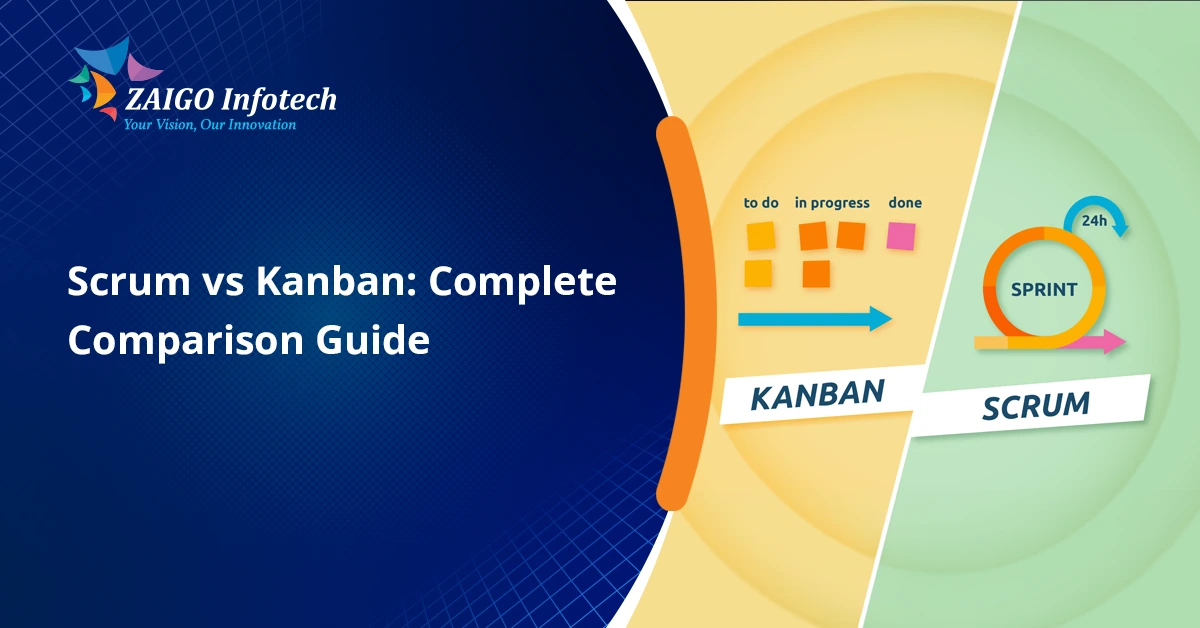
  • To Do
  • In Progress
  • Done

This is why Kanban vs Scrum board aspects can be so intriguing, as Kanban puts the emphasis on flow rather than structure.

Benefits of Kanban

  • Flexibility in task management
  • Faster delivery cycles
  • Easy to implement
  • Best suited for maintenance and support teams

If you’re exploring deeper, understanding Kanban in agile can help you apply it effectively within modern Agile ecosystems.

What Is Scrum? (The Most Popular Agile Framework)

Scrum is a highly popular structured Agile framework that divides a project into several iterations called sprints.

Key Components of Scrum

  • Sprints (1–4 weeks)
  • Scrum Master
  • Product Owner
  • Daily stand-ups
  • Sprint reviews and retrospectives

Scrum Process

Contrary to Kanban, Scrum operates in a fixed loop:

  1. Sprint Planning
  2. Sprint Execution
  3. Daily Scrum Meetings
  4. Sprint Review
  5. Retrospective

This structured approach makes scrum vs kanban board comparisons particularly important for teams choosing between flexibility and predictability.

Benefits of Scrum

  • Transparent roles and clear responsibilities
  • Predictable delivery cycles
  • Strong team collaboration
  • Continuous improvement through retrospectives

Kanban vs Scrum: Key Differences Explained

Understanding the difference between Kanban and Scrum will help you make a well-thought-through decision.

1. Workflow Structure

Kanban

  • Continuous flow
  • No fixed iterations

Scrum

  • Time-boxed sprints
  • Start and end dates defined

2. Flexibility

Kanban

  • Highly flexible
  • Tasks can be added anytime

Scrum

  • Less flexible during sprints
  • Changes are limited until the next sprint

3. Roles

Kanban

  • No predefined roles

Scrum

  • Scrum Master
  • Product Owner
  • Development Team

4. Board Management

Kanban vs Scrum Board Comparison

Feature Kanban Board Scrum Board
Updates Continuous Per sprint
Task Limits WIP limits Sprint backlog
Flexibility High Moderate

5. Metrics

Kanban

  • Lead time
  • Cycle time

Scrum

  • Velocity
  • Sprint burndown

Kanban vs Scrum Board: Visual Comparison

There are several differences when you compare a kanban vs scrum board. First and foremost, how work is visualized and managed is a big difference.

Kanban Board

  • Continuous task movement
  • Focus on flow
  • No reset

Scrum Board

  • Reset after each sprint
  • Focus on sprint goals
  • Structured backlog

Teams with fluctuating workloads will find this factor very determining when making a scrum vs kanban board decision.

Agile vs Kanban vs Scrum: What’s the Real Difference?

Many teams get mixed up here.

Agile

  • Philosophy or mindset

Kanban

  • Workflow management method

Scrum

  • Structured Agile framework

In short:

  • Agile = Principles
  • Kanban = Flow optimization
  • Scrum = An iterative delivery system

Knowing agile vs kanban vs scrum will enable organizations to link their strategy to their execution.

When to Use Kanban

Kanban is an ideal option for:

  • Support and maintenance teams
  • Continuous delivery environments
  • Projects with unpredictable workloads

Ideal Use Cases

  • IT support teams
  • DevOps pipelines
  • Bug tracking systems

Kanban shines where flexibility and speed are more important than strictly following timelines.

When to Use Scrum

Scrum works best for:

  • Product development teams
  • Projects with clear goals
  • Teams that benefit from structure

Ideal Use Cases

  • Software development
  • Feature releases
  • Startup product builds

If custom software development services are your field, Scrum could be the framework that brings you discipline and predictability.

Can You Combine Kanban and Scrum? (Scrumban Explained)

Yes, and quite a lot of teams do. 

Scrumban is a hybrid approach that combines:

  • Scrum’s structure
  • Kanban’s flexibility

Benefits of Scrumban

  • Improved workflow efficiency
  • Better adaptability
  • Reduced bottlenecks

This hybrid model will continue to grow in popularity as of 2026 as teams look for a middle ground between control and agility.

Common Mistakes Teams Make

Even very experienced teams make mistakes when deciding Kanban vs Scrum.

1. Choosing Based on Trends

Just because Scrum is widely used, it doesn’t mean that it’s the one for you.

2. Ignoring Team Size

Scrum works best for small teams, while Kanban scales easily.

3. Misunderstanding Agile

Many confuse frameworks with the Agile philosophy itself.

Kanban vs Scrum: Pros and Cons

Kanban Pros

  • Flexible
  • Easy to implement
  • Continuous delivery

Kanban Cons

  • Less predictability
  • No defined roles

Scrum Pros

  • Structured workflow
  • Clear accountability
  • Regular feedback loops

Scrum Cons

  • Requires discipline
  • Less flexible mid-sprint

How to Choose Between Kanban and Scrum

Here’s a simple decision framework:

Choose Kanban If:

  • Your work is continuous
  • Priorities change frequently
  • You need flexibility

Choose Scrum If:

  • You have defined goals
  • You want structured delivery
  • Your team thrives on routine

Real-World Example: Kanban vs Scrum in Action

Imagine two teams:

Team A (Kanban)

  • Handles customer support tickets
  • Needs quick turnaround
  • Works continuously

Team B (Scrum)

  • Builds a mobile app
  • Works in 2-week sprints
  • Delivers features incrementally

If your focus is on Flutter app development services, Scrum can structure the release of features effectively, just as Kanban can be great for maintenance after launch.

The Future of Agile: What’s Changing in 2026?

The argument of kanban vs scrum continues to spin.

Trends to Watch

More and more companies are not chasing a single framework but are instead embracing flexibility.

Final Verdict: Kanban vs Scrum — Which Is Better?

The kanban vs scrum debate does not have a globally accepted winner at the moment.

Kanban wins for flexibility and continuous delivery
Scrum wins for structure and predictability

The best choice depends on your:

  • Team size
  • Project type
  • Workflow complexity

In many cases, combining the two often gives the best result.

Conclusion

Choosing between kanban vs scrum is not about picking the “best” framework; it’s about choosing the right one for your team.

Learning how to differentiate between Kanban and Scrum, taking a deep dive into your process, and following the values of Agile can help you a lot in terms of productivity and delivery success. Whether you are dealing with agile and kanban methodologies or looking at more structured frameworks like scrum, the essence is continuous improvement.

FAQs – Kanban vs Scrum

1. What is the main difference between Kanban and Scrum?

The main distinction between Kanban and Scrum is that Kanban supports uninterrupted flow and offers high flexibility, whereas Scrum farms out work in fixed-length time intervals called sprints and has well-defined roles and tightly controlled procedures.

2. Which is better: Kanban or Scrum?

The kanban vs scrum debate may not be solved by a one-size-fits-all solution. Kanban is perfect for teams who value flexibility and continuous delivery, whilst Scrum is better suited for teams who want structured development cycles and predictable results.

3. Can Kanban and Scrum be used together?

Yes, some teams adopt a combination of both frameworks via a hybrid approach called Scrumban. This way, the team can enjoy the structure of Scrum and, at the same time, retain the flexibility of Kanban, which is why it is widely used in modern Agile and Kanban methodologies.

4. What is the difference between a Kanban board and a Scrum board?

The primary kanban vs Scrum board difference is the manner in which the work is controlled. A Kanban board is ongoing and highlights the flow of work with work-in-progress (WIP) limits, whereas a Scrum board is wiped clean each time and tracks tasks inside a fixed sprint backlog.

What Is Kanban Methodology in Agile 2026? Secrets Behind Faster, Smarter Teams

Businesses nowadays can’t rely on slow and stiff processes, as the world around them is continuously getting faster and more digital. That is precisely the reason why Kanban in Agile is considered a method with a lot of potential. The method itself is based on visuals and allows teams to deliver quickly, spend less time on bottlenecks, and keep improving without stopping.

If you’ve ever wondered about ‘what is kanban methodology’, its relation to Agile, and why the best teams are its fans, this guide will break it all down in a simple yet expert way.

What Is Kanban Methodology?

First of all, what is kanban methodology really?

Kanban is a method of managing workflows visually to achieve the optimization of work processes, enhancing efficiency, and guaranteeing continuous delivery. It was a method associated with manufacturing (Toyota), but as a matter of fact, its use has been growing considerably in Agile software development and project management. 

Kanban does not focus on planning everything up front. Instead, it is more concerned with:

  • Visualizing tasks
  • Reducing the amount of work in progress
  • Improving flow
  • Delivering continuously

This turns Kanban into an essential component of the modern agile software development process, where adaptability and quickness are the biggest considerations.

Is Kanban in Agile Methodology?

One of the questions people often ask is: Is Kanban in agile methodology? 

The answer is yes; however, with a very different feature. 

Over time, the original character of Kanban was that of a non-Agile approach, yet it is highly in line with Agile principles, such as:

  • Continuous improvement
  • Customer collaboration
  • Adaptive planning

Contrary to the Scrum agile method, Kanban does not demand fixed iterations (sprints). It simply allows a continuous workflow, which makes it more suitable for teams that rely on delivery without a break.

While Scrum uses time-boxed cycles such as an agile sprint, Kanban focuses on flow efficiency.

How Kanban in Agile Works

Kanban relies on a very simple but effective system: The Kanban board.

Key Components of a Kanban Board

  • Columns → Indicate workflow stages (To Do, In Progress, Done)
  • Cards → Represent tasks or work items
  • Work-in-Progress (WIP) Limits → Set limits on the number of tasks being worked on

This format enables the team to keep a visual track of progress and instantly see where blockages occur.

Kanban Principles Explained

Understanding kanban principles and practices is essential to implementing them effectively.

1. Start with What You Do Now

Kanban doesn’t require drastic changes. It improves your existing workflow gradually.

2. Pursue Incremental Change

Instead of big transformations, Kanban promotes small, continuous improvements.

3. Respect Current Roles

No need to restructure – Kanban will fit your current setup teams.

4. Encourage Leadership at All Levels

Everyone participates in improving processes.

Core Kanban Practices

To truly master project management kanban, teams must follow these practices:

Visualize Work

Make all tasks visible on a board for transparency.

Limit Work in Progress (WIP)

Less multitasking and better focus.

Manage Flow

Ensure tasks move smoothly without delays.

Make Policies Explicit

Define clear rules for workflows.

Continuous Improvement

Always analyze and improve performance.

These kanban principles and practices make it one of the most efficient systems in Agile environments.

Kanban System Examples in Real Life

Let’s explore some kanban system examples to understand their practical use.

Software Development Teams

Tasks move from backlog → development → testing → deployment.

Customer Support Teams

Tickets flow from open → in progress → resolved.

Marketing Teams

Campaigns progress from planning → execution → analysis.

Even companies offering custom software development or those also acting as an api development company rely on Kanban to handle their complex workflows efficiently.

Kanban vs Scrum: Key Differences

Feature Kanban Scrum
Workflow Continuous Sprint-based
Flexibility High Moderate
Roles No fixed roles Defined roles
Planning Ongoing Sprint planning

Scrum is very much a framework, while Kanban is a method – this makes the latter more suitable for rapidly changing environments.

Benefits of Kanban in Agile

Implementing Kanban in agile offers several advantages:

1. Increased Productivity

More productive getting better results by working on fewer things at a Time

2. Better Visibility

Visual boards display real-time project progress updates

3. Reduced Bottlenecks

Personnel can quickly identify, deal with, and rectify problems.

4. Improved Collaboration

Teams work more transparently and efficiently.

5. Faster Delivery

Continuous flow enables quicker product releases.

When Should You Use Kanban?

Kanban works best when:

  • Work arrives unpredictably
  • Continuous delivery is required
  • Teams need flexibility
  • Processes need optimization

In particular, it also works excellently for teams that want to build AI agent solutions or manage dynamic development pipelines.

How to Implement Kanban Step-by-Step

Step 1: Map Your Workflow

Identify the steps of your current process.

Step 2: Create a Kanban Board

Use tools like Trello, Jira, or physical boards.

Step 3: Define WIP Limits

Decide how much work can be in progress

Step 4: Track Metrics

Keep an eye on lead time and cycle time.

Step 5: Improve Continuously

Make changes based on feedback.

Common Mistakes to Avoid

  • Ignoring WIP limits
  • Overcomplicating workflows
  • Lack of team collaboration
  • Not reviewing performance metrics

Avoid any mistakes here to keep your project management kanban system effective.

Future of Kanban in Agile (2026 and Beyond)

Kanban is evolving with technology. With AI and automation:

  • Predictive analytics improve workflow
  • Automation reduces manual effort
  • AI-driven insights optimize performance

Those enterprises that decide to use Kanban nowadays will be able to make the most of the innovations that will come.

Final Thoughts: What Makes Kanban Still the Most Popular Agile Workflow Anyway?

So, what is kanban methodology really about?

It’s a focus on simplicity, efficiency, and continual improvement. Kanban offers a flexible system that changes according to the needs of those managing software projects, customer support, or operations scaling. 

If your company intends to change ways of working by increasing delivery speed and getting much more done, then through your agile software development process, you should certainly think of implementing Kanban. 

And if you want expert help implementing Agile solutions, explore services from Zaigo Infotech to transform your workflows and stay ahead in 2026.